Austria
William Tell (P. G. Wodehouse Edition)Austria is the imperial power behind the foreign rule of Switzerland in William Tell: its Emperor appoints Hermann Gessler to govern the country, and the threat of Austrian retaliation shapes the Swiss revolution even after Gessler is killed. Austria’s role thus shifts from the source of the Swiss people’s subjection to a danger they prepare to resist, before the Emperor’s death removes the immediate prospect of reconquest.
Imperial Rule and Its Administration
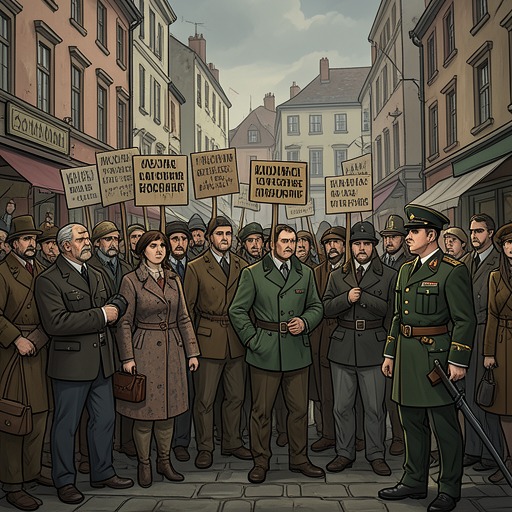
The story establishes that Switzerland belonged to the Emperor of Austria, who could do with it as he liked. One of his first acts was to send his friend Hermann Gessler to govern the country. The narrative presents Austrian authority through this appointment: Gessler is the local instrument of imperial rule, while the Emperor remains the power whose decisions place Switzerland under a foreign governor.
Under Gessler, the conflict takes a material form in the taxes imposed on ordinary people. He taxes flocks of sheep and charges farmers more if they sell their sheep and buy cows; he also taxes bread, biscuits, jam, buns, lemonade, and whatever else he can think of. The Swiss object to taxation and organize a complaint, but the account makes clear that their grievance concerns a governing system backed by Austria, not simply an isolated disagreement with a tax collector.
The Uprising and the Austrian Threat
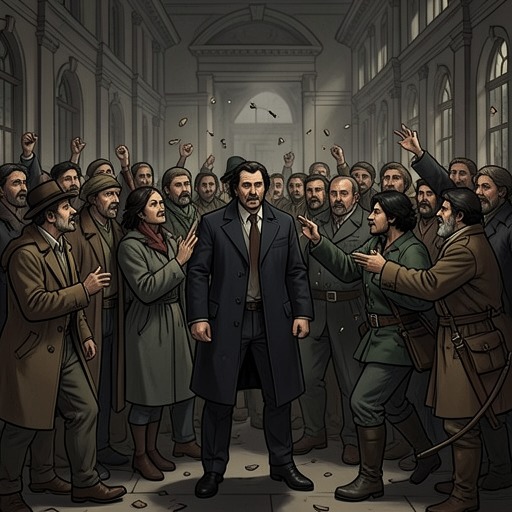
Gessler’s death becomes the signal for the Swiss people to rise against the Austrians. A revolt had been brewing for a long time: the people had sworn to drive the enemy from their country, preparations were under way throughout Switzerland, and nobles and peasants had united. Once news of the Governor’s death arrives, meetings take place in every town and the people resolve to begin the revolution without delay.
That same night, the Swiss capture by assault the fortresses Gessler had built during his years of rule. The last to fall had only recently been started, and people forced to build it take pleasure in pulling down the stones they had labored to put in place; children join in. The destruction gives physical expression to the reversal of power, but it does not make the danger from Austria disappear. Arnold of Melchthal asks whether the Emperor will come seeking revenge for Gessler’s death and the burning of his fortresses.
William Tell answers that the Emperor may come with his armies, but the Swiss will resist. He points to the few mountain passes through which an enemy can approach and to the people’s unity as their great strength. Austria therefore remains a military threat even after its governor has been expelled: the revolution has won control of the country, but its survival still appears to depend on defending that independence against imperial retaliation.
The Emperor’s Death and Switzerland’s Freedom
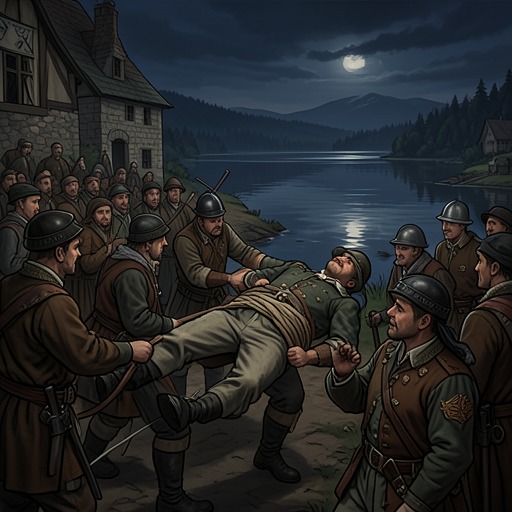
The Emperor’s death changes the balance. As he rides from Stein to Baden, the lords of Eschenbach and Tegerfelden attack him with spears; his bodyguard is across a stream he has just crossed and cannot come to his aid. He dies instantly. The narrative reports this as the event that allows the Swiss revolution to proceed without check.
The Emperor’s successor has too much to do defending himself against the men who killed his father to consider attacking Switzerland. By the time he is free to turn his attention to the Swiss, they have become too strong to be attacked. Austria’s imperial claim consequently loses its force in practice, and Switzerland becomes free. The account closes this political transition by returning William Tell to his home, where he lives happily with his wife and sons.